Cabinets and countertops are two of the biggest design decisions in any kitchen or bathroom renovation.
They take up a large amount of visual space, they are used every day, and they usually remain in the home for years. When the two work well together, the entire room feels more complete. When they do not, even individually attractive materials can feel disconnected.
The good news is that choosing cabinets and countertops does not need to be complicated.
Here are some practical ways to make selections that work together.
Start With the Cabinets
In many kitchen projects, cabinetry is selected before the countertop.
There is a good reason for this.
Cabinets cover a large portion of the room and establish much of the overall style. Door style, finish, color, hardware, and layout all influence which countertop options will look right.
Modern Elegance Kitchen & Bath offers custom, semi-custom, and stock cabinetry options, giving homeowners different ways to approach both the look and function of the space.
Once you have narrowed down the cabinet direction, it becomes much easier to compare countertop samples.
Decide How Much Contrast You Want
One of the first decisions to make is whether you want the cabinets and countertops to contrast or blend together.
Both approaches can work.
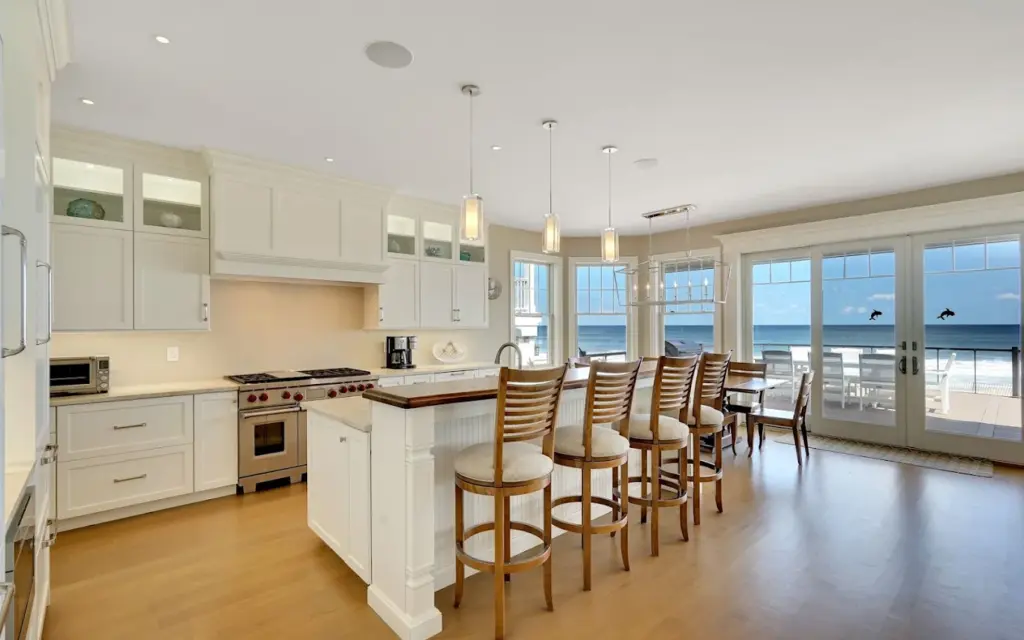
For example, lighter cabinetry paired with a darker or more patterned countertop can create noticeable contrast.
A lighter countertop with white, cream, natural wood, or similarly soft cabinetry can create a more blended appearance.
Neither choice is automatically better.
Think about the overall feeling you want from the room.
If the kitchen already has several strong design elements, a quieter countertop may help keep everything balanced. If the cabinetry is simple, a countertop with more movement may become an attractive focal point.
Look at Samples Together
Never choose cabinetry and countertops completely separately if you can avoid it.
A cabinet finish can look one way by itself and completely different when placed next to a countertop sample.
The same is true for stone.
Colors that appear white, gray, beige, or cream often contain undertones that become much easier to see when two materials are placed side by side.
Looking at physical samples together is one of the easiest ways to catch combinations that do not work before products are ordered.
It also gives you a better idea of how the materials will look as part of one finished room.
Pay Attention to Undertones
Undertones are one of the most important details in matching materials.
Two surfaces may both appear gray, but one could lean warm while the other feels cooler. A white cabinet may contain a warm creamy tone while the countertop has a sharper blue or gray appearance.
These differences may be subtle when materials are viewed separately.
Placed next to each other, they can become much more noticeable.
This does not mean every color needs to match. Contrast can be a good thing. The goal is simply to make sure the combination looks intentional.
Consider Quartz, Granite, Marble, and Other Stone Options
Different countertop materials create different appearances.
Quartz is available in a broad range of colors and patterns, which can make it easier to coordinate with many cabinet styles.
Granite provides natural variation, meaning each slab can have its own movement and character.
Marble is known for its distinctive natural appearance and can create a very different look depending on the stone selected.
Other hard-stone surfaces may also be available depending on the project.
Instead of choosing a countertop simply because you like the material on its own, think about how it will look above the cabinetry you have selected.
Do Not Forget the Backsplash
Cabinetry and countertops are important, but the backsplash sits directly between them.
That makes it part of the same visual combination.
Before making final decisions, think about whether the backsplash will be simple, patterned, textured, or made from a material similar to the countertop.
If both the countertop and backsplash have a lot of movement, the finished kitchen may feel busier than expected.
If the countertop already has strong veining or pattern, a simpler backsplash can allow it to stand out.
On the other hand, a quieter countertop can give you more room to use an interesting tile.
Think About Flooring at the Same Time
Flooring is another large surface that affects how cabinets and countertops look.
Natural wood, hardwood, luxury vinyl, or tile can introduce additional colors and undertones into the room.
If you are replacing the flooring as part of the remodel, look at samples together before finalizing the major materials.
If the flooring will remain, make sure your new cabinetry and countertops work with what is already there.
You do not need every surface to be the same color. In fact, that can make the room feel flat.
The goal is simply to make sure the materials work together.
Consider the Size and Lighting of the Room
Colors can feel different depending on the size of the room and the amount of natural light available.
A dark cabinet finish may look great in a bright showroom but feel much heavier in a smaller kitchen with limited windows.
Similarly, a countertop that appears bright under showroom lighting may look different in your home.
Think about how much natural light the room receives and how the materials may look throughout the day.
Lighting is another reason it can be helpful to compare samples in the actual space when possible.
Keep the Overall Home in Mind
Your kitchen or bathroom does not exist separately from the rest of the house.
Consider the flooring, trim, wall colors, furniture, and nearby rooms.
You do not need to copy those materials exactly, but the renovated space should feel like it belongs in the home.
This is especially important in open-concept homes where the kitchen can be seen directly from dining and living areas.
Do Not Choose Everything at Once
There are a lot of decisions involved in remodeling, and trying to make every choice in one sitting can become overwhelming.
Work through the major selections in a logical order.
Start with the layout and cabinetry. Then consider countertops. From there, flooring, tile, hardware, fixtures, and other finishes can be coordinated around those larger decisions.
Taking the project step by step makes it easier to see how everything fits together.
Need Help Choosing Cabinets and Countertops in Manasquan, NJ?
Modern Elegance Kitchen & Bath helps homeowners in Manasquan and surrounding Jersey Shore communities select cabinetry, countertops, flooring, tile, hardware, and other materials for kitchen and bathroom projects.
Instead of trying to choose each product separately, our team can help you look at the entire room and find selections that work together.
Whether you are planning a complete renovation or updating the major finishes in your space, contact Modern Elegance Kitchen & Bath today to schedule a consultation and start planning your project.